Commercial Waste in Ilford

Commercial waste in Ilford needs a clear, dependable approach when business premises produce mixed rubbish, bulky items or regular refuse that should be handled properly. We provide commercial waste removal for workplaces that want their waste taken away in a tidy, organised way, with the aim of keeping premises workable and storage areas under control. The service is built around straightforward collection and disposal of business waste, rather than one-off guesswork or improvised clear-outs.
Our work covers a range of commercial waste types, so the right collection can be matched to the kind of material you need removed. That may include office waste, unwanted furnishings, shop fittings, light refurbishment debris or general rubbish gathered during a reset, move or tidy-up. For businesses comparing options, pricing and quotes can help set expectations before you decide how to proceed.
If you are planning a collection, it helps to think about the type of waste, how much there is and whether anything needs separating before removal. A clear description of the material makes it easier to arrange the right level of service, especially when the load contains a mix of recyclable items and general waste. When you are ready, request a quotation in the way that suits you best.
Business waste collections for day-to-day operations
Business waste collections are useful when workplaces need rubbish taken away without disrupting the working day more than necessary. We can deal with the kinds of waste that build up in offices, small commercial units, shared work areas and customer-facing premises, including packaging, broken fixtures, redundant equipment and general clutter. The focus is on practical removal and sensible handling rather than leaving you to manage mixed waste in-house.
For many firms, the most useful part of a collection service is the ability to clear items in a single visit rather than leaving several awkward piles behind. That can make it easier to recover floor space, prepare a room for new use or clear an area before contractors, staff or stock arrive. The work is also suited to waste streams that should be separated from ordinary household rubbish, which is one reason many businesses look for a service dedicated to commercial waste removal.
Choosing the right collection for your premises
Not every workplace produces the same kind of waste, so the most suitable collection depends on the layout, the materials involved and the access to the collection point. An office may need a tidy removal of old furniture and paper-heavy waste, while a retail or trade unit may produce more packaging, display materials or mixed general rubbish. If the load includes specialist items, it is sensible to check what can be accepted and how it should be prepared before booking.
Office waste and workplace clearances
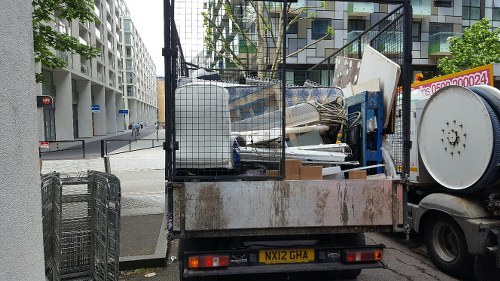
Office waste can accumulate gradually, especially when desks, storage rooms and communal areas are used to hold redundant items for too long. We remove office waste that needs to be cleared as part of an internal reorganisation, a move, a refurbishment or a general tidy-up. Typical work includes unwanted desks, chairs, cabinets, screens, packaging, paper waste and other items that are no longer needed at the premises.
Office clearance is a useful option when the job is larger than a simple bin collection but does not need a full relocation service. It can cover grouped items from one room or several areas, helping you reclaim working space and reduce visual clutter. Where suitable, the collection can be planned around operational hours so the premises remain usable during the process, although the exact timing depends on the booking arrangement.
For a smooth collection, it helps to group obvious waste together and make a note of anything that should stay on site. If there are access limits, loading constraints or mixed materials, mention those when requesting a quote so the collection can be planned more accurately. This kind of preparation is usually simple, but it makes a notable difference to how efficiently commercial waste can be removed.
Furniture, fixtures and bulky items
Bulky furniture often needs more than a standard waste bin route, especially when items are large, heavy or difficult to move through tight premises. We remove business furniture that is no longer needed, including tables, chairs, shelving, cabinets and other furnishings gathered during an office change, a refit or a closure. The service is intended to be practical and measured, with the aim of removing items cleanly and leaving the area ready for its next use.
For premises with several items to remove, it is often sensible to distinguish between reusable furnishings, scrap pieces and anything that must be disposed of as waste. That separation can help streamline the job and reduce confusion at the point of collection. If you also need related item disposal, furniture disposal gives a focused route for arranging that kind of removal. Mixed furniture loads are easier to handle when the items are identified clearly in advance.
Where items are awkward or fixed in place, the collection may need extra care during dismantling or movement through stairways, corridors or shared entrances. We aim to handle removals in a way that respects the property and the route out of it, while keeping the process workable for businesses that cannot afford avoidable disruption. Request a quotation if you want the removal planned around a specific room, floor or load type.
Recycling, sorting and responsible disposal

Commercial waste is rarely a single material, so sensible sorting matters when the load includes paper, plastics, metals, furniture, appliances or mixed general rubbish. We handle collections with an eye to separating suitable items from material that must go to disposal, which helps keep the removal process orderly. This is especially relevant for businesses that generate a regular blend of office waste, packaging and outdated fittings.
Recycling and sustainability explains the broader approach to handling waste streams that can be sorted for recovery where appropriate. For businesses, that means a collection can be more than a simple lift-and-dump exercise; it can be a structured removal process that considers the nature of the material. It is still important to be realistic about what can be accepted, because not every item belongs in the same stream.
In practice, the most efficient removals are usually those where the waste is easy to identify and access. If there are items with different disposal needs, placing them into separate groups before collection can reduce uncertainty and help the team work through the load logically. That approach is often especially useful for commercial waste collected from offices, back rooms, storerooms and refurbished units.
Hazardous and restricted waste considerations
Some commercial waste cannot be treated in the same way as ordinary office rubbish or furniture. Hazardous or restricted materials may require specific handling, and businesses should check in advance whether the waste can be accepted and what information is needed before collection. We are able to discuss those needs and direct the removal towards the correct service route where appropriate, rather than leaving awkward material mixed into a general load.
Hazardous waste disposal is relevant where the material presents additional handling requirements and should not be treated as standard waste. That might involve substances, contaminated items or other restricted materials that need extra care. Because the exact rules vary by material, the right approach is to describe the waste clearly and avoid assuming that all commercial rubbish can be collected in the same way.
Clear identification is especially useful with unusual items, because it helps avoid delays and allows the collection to be planned around the right disposal route. If the waste includes any restricted material, mention it separately when asking for a quotation. That makes it easier to advise on what can be included and what may need a different arrangement.
Business waste from fit-outs, refits and moving days
Refits and moving days often create a particular kind of commercial waste: part leftovers from the old layout, part packaging from the new one and part items that no longer have a place in the business. We can remove waste from those transitional jobs so that the premises are not left cluttered once the main work is done. This includes broken-down furniture, mixed waste, packaging and other surplus items that are no longer useful.
Useful planning usually comes down to three things: what needs removing, where it is stored and how it should be separated before collection. A simple list or grouped set of items is often enough to start the process, especially where the premises contain more than one type of waste. For larger clearances, business waste removal provides a broad route for arranging a commercial collection that matches the premises and the materials involved.
If you are managing a move or refurbishment, try to identify which items are staying on site and which are definitely going. That reduces the chance of accidental removal and makes it easier to agree the scope of work before collection day. Businesses often find that a little structure at the outset keeps the rest of the process more straightforward.
About Ilford
Ilford is a large suburban district in East London, historically part of Essex and now within the London Borough of Redbridge. It sits on the River Roding corridor and has grown from a settlement on a crossing point and route into London into a busy town centre with extensive residential areas around it. The area is shaped by a mixture of Victorian and later suburban development, with streets of terraced housing, interwar estates and modern commercial buildings giving way to more varied centres of activity closer to the main roads. Ilford station, now on the Elizabeth line, is one of the key transport landmarks in the district, and the nearby A12 and A406 also influence how the area is connected to surrounding parts of the capital. The town centre has long been a focal point for shopping and services, while cultural life is reflected in libraries, places of worship, community spaces and the range of restaurants and shops around Cranbrook Road and the central streets. Valentines Park is one of the best-known green spaces in the district, with formal gardens, open lawns and Valentines Mansion providing a strong historic reference point. The nearby Valentines Mansion and its grounds connect the modern town with older layers of local history, while the Redbridge area as a whole includes a mix of urban density and pockets of parkland. Taken together, these features give Ilford the character of a busy London district that combines transport links, civic life, housing and public open space.
Office furniture, fixtures and light specialist items
Some commercial waste includes items that are not quite ordinary rubbish but still need to be removed from the premises. That may include office partitions, light fixtures, redundant fittings, counters, shelving and other components that have come out of a refit or partial closure. We can deal with these removals where the items are suitable for collection and the route out of the building is workable.
Furniture clearance is helpful when the job involves more than a single item but does not amount to a full property clearance. It gives businesses a way to remove grouped furnishings and related pieces without trying to treat them as standard refuse. If the load includes broken office chairs, tired storage units or dismantled workstations, describing the items in advance will help shape the removal.
When furniture is mixed with general waste, the collection is usually smoother if the load is organised before arrival. That does not mean everything must be sorted perfectly, but it does help to identify obvious categories and point out anything that should remain on site. Commercial waste collections are often most efficient when the business can separate key items from the rest of the material.
Site access, loading and practical preparation
Access is one of the main factors that influences how a commercial waste collection runs. Ground-floor premises, lift access, service yards and clear parking arrangements all make a difference to how quickly items can be loaded and moved away. If access is limited, a quote should take that into account so the job can be planned sensibly. In many cases, the collection remains straightforward once the route and item positions are understood.
Two practical details are especially useful when you request a quotation: the approximate amount of waste and any access or timing constraints. If you have photographs, a brief inventory or a description of where the material is stored, those details can help explain the job clearly. For businesses with recurring waste, it may also be useful to note whether the waste is a one-off clearance or part of a repeat collection pattern.
For an organised start, use these steps:
- separate obvious rubbish from items that should stay
- note any heavy, awkward or restricted materials
- check whether the collection point is easy to reach
- mention if the waste is spread across several rooms
Further removal options for commercial premises
Commercial waste needs vary from one business to another, so it can be useful to look at related removal options where they fit the job better. Some premises need a broad general clear-up, while others mainly need one type of item taken away. We provide a range of services that can be matched to that need, including item-focused removals and larger clearances where the waste has built up over time.
If your job centres on a single room, storage area or collection of loose items, a more focused service may suit better than a general waste visit. Garage clearance is one example of a service that can be relevant where overflow storage or business equipment has accumulated in a back area. Similarly, if the waste includes loose household-style items from a mixed-use premises, the right option should be chosen carefully to match the load.
For a final step, keep the request simple and specific: say what needs removing, where it is, and when you would like the collection arranged. Request a quotation today if you want to compare the right removal option for your commercial waste in Ilford.