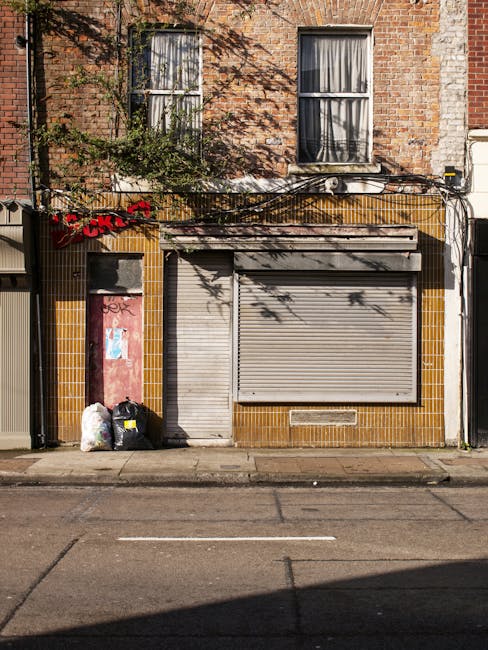
Ilford High Road Rubbish Removal Guide for Shopfronts
If you run a shop on Ilford High Road, you already know rubbish has a habit of building up at the worst possible time. Boxes arrive, packaging piles up, old displays get replaced, and suddenly the front of your shop looks tired before the day has even properly started. This Ilford High Road rubbish removal guide for shopfronts is here to make that easier. It explains how shop waste handling works in practice, what to watch out for, and how to keep your frontage clean, safe, and welcoming without creating extra hassle.
Whether you manage a small independent unit, a busy takeaway, a salon, or a retail space with frequent deliveries, the same basic challenge applies: rubbish must be removed quickly, legally, and with as little disruption as possible. Let's face it, nobody wants to manoeuvre past broken cartons, greasy sacks, or a half-blocked entrance at 8:30 on a wet Tuesday morning.
Table of Contents
- Why Ilford High Road rubbish removal guide for shopfronts Matters
- How Ilford High Road rubbish removal guide for shopfronts Works
- Key Benefits and Practical Advantages
- Who This Is For and When It Makes Sense
- Step-by-Step Guidance
- Expert Tips for Better Results
- Common Mistakes to Avoid
- Tools, Resources and Recommendations
- Law, Compliance, Standards, or Best Practice
- Options, Methods, or Comparison Table
- Case Study or Real-World Example
- Practical Checklist
- Conclusion
- Frequently Asked Questions
Why Ilford High Road rubbish removal guide for shopfronts Matters
A shopfront is not just a doorway. It is your first impression, your brand, and often your most visible working space. If waste is left outside too long, it can make even a polished business look neglected. That matters on a street like Ilford High Road, where foot traffic, deliveries, and customer attention are all moving quickly.
There is also a practical side. Shop waste can create slip risks, attract pests, block access, and make it harder for staff to load or unload stock. In some cases, clutter near the entrance can affect customers with pushchairs, mobility aids, or large shopping bags. A clean frontage is not a luxury. It is basic operational hygiene.
For many businesses, rubbish removal also affects working rhythm. If waste is not handled in a predictable way, staff start improvising: one bin overflows, another gets tucked by the shutter, and the back room turns into a holding area. That is usually the moment the system has already failed.
One useful way to think about it is this: waste management is part of customer experience. A neat shopfront tells people the business is on top of things. A messy one does the opposite, even if the products inside are excellent.
Expert summary: For shopfronts, the best rubbish removal setup is the one that keeps entrances clear, waste separated, collections predictable, and staff time protected. Simple sounds boring, but boring is good here.
How Ilford High Road rubbish removal guide for shopfronts Works
In practice, shopfront rubbish removal is about creating a repeatable system. You identify what waste your business produces, decide how it should be stored, and arrange a removal method that fits your trading hours and the street environment.
Most shopfronts generate a mix of materials: cardboard, plastic wrapping, damaged stock, old shelving, packaging tape, food waste from hospitality businesses, broken fittings, and the occasional bulky item. A clean-up may be needed after a refit, a seasonal change, or a delivery surge. That is where a commercial clearance approach is often more efficient than trying to deal with everything one sack at a time.
A sensible workflow usually looks like this:
- Sort the waste at source. Cardboard, general rubbish, and bulky items should not all end up in one unpredictable pile.
- Store it safely. Keep waste away from the entrance, display windows, and customer queuing areas.
- Schedule removal in line with business hours. Early mornings or quieter periods often work best.
- Separate special waste. Fridges, appliances, hazardous materials, and confidential materials need different handling.
- Use a licensed, insured team. That helps reduce risk, especially if anything needs to be loaded quickly from a tight frontage.
If your shop produces recurring commercial waste, a broader arrangement such as business waste removal may be more appropriate than one-off clearances. If the job is larger, involves mixed items, or includes fittings and fixtures, you may also find waste removal more useful as a general service option.
Truth be told, the real skill is not in lifting things. It is in timing, sorting, and keeping the frontage usable while the work happens.
Key Benefits and Practical Advantages
The biggest benefit of organised shopfront rubbish removal is that it stops small problems from growing into daily friction. You notice it in the little things first: staff can open the door without stepping around sacks, deliveries land without a shuffle, and customers are not greeted by a row of flattened boxes that have been sitting there since Wednesday.
- Cleaner appearance: A tidy frontage supports your brand and makes the business feel cared for.
- Better safety: Clear walkways reduce trip and obstruction risks.
- Less staff disruption: Teams can focus on serving customers rather than moving rubbish around.
- Improved space use: Back rooms and rear access areas stay functional.
- Faster turnaround after delivery days or refurbishments: Clear-outs happen more efficiently when waste is sorted properly.
- Reduced odour and pest issues: Especially important for food premises or mixed-use shopfronts.
There is also a morale point that people overlook. A neat working environment helps teams feel less boxed in. It sounds small, but a clean entrance and uncluttered threshold can make a shop feel calmer and more professional during a busy shift.
If your clearance includes old shop furniture, display units, or worn seating, relevant services such as furniture disposal and furniture clearance may help you remove bulky items without dragging them through customer areas.
Who This Is For and When It Makes Sense
This guide is for any shopfront that needs regular or occasional rubbish removal, but it is especially relevant if you run a business with visible customer access. That includes retail stores, convenience shops, barbers, salons, takeaway outlets, cafes, small pharmacies, and independent service premises.
It also makes sense for businesses in transition. Maybe you are changing the layout. Maybe a supplier has delivered too much packaging. Maybe the old stockroom has become a storage jungle. Perhaps your shop is closing, downsizing, or handing over a unit and you need everything cleared fast. In those moments, ordinary bin collections are rarely enough.
A shopfront clearance is often the right choice when you have:
- bulky waste that will not fit into normal bins
- cardboard, wrapping, and packaging from repeated deliveries
- old shelving, counters, or point-of-sale fixtures
- white goods or appliances
- mixed waste after a fit-out or refresh
- urgent clearance needs before opening time
If you are dealing with appliances or cold storage items, the specialist page for fridge and appliance removal is worth a look. If the issue is mainly internal clutter, stockroom overflow, or redundant shop equipment, the logic is similar to an office clearance: make the removal plan fit the premises, not the other way round.
And yes, sometimes a shopfront needs a bigger reset than people admit. That is normal. It happens.
Step-by-Step Guidance
Here is a straightforward way to manage shopfront rubbish removal without turning it into a headache.
1. Walk the site first
Stand outside the shop and look at it the way a customer would. Where does waste collect? Where do staff step out with bags? Is there a doorway pinch point? This quick review is often more useful than an hour of guesswork. You will notice the same awkward corner every time.
2. Identify waste types
Make a simple list: cardboard, plastics, general waste, old fixtures, appliances, confidential paper, broken furniture, or refurbishment debris. This matters because different waste streams may need different handling. If you skip this stage, the clearance usually gets slower and messier. Simple as that.
3. Separate high-risk items early
Hazardous materials, sharp fragments, electrical items, and anything contaminated should be isolated. If in doubt, use specialist support rather than guessing. A useful reference page for this is hazardous waste disposal.
4. Choose your timing
For shopfronts, timing matters almost as much as removal itself. Early morning before opening, after close, or during a quieter trading window usually works best. On a narrow high street, a badly timed clearance can disrupt customers and staff at once. Not ideal.
5. Keep access clear
Waste should never block the main entrance, emergency access, or pavement space any longer than necessary. If your premises already feel tight, it may help to move bulky items from the rear first, then stage them for quick loading.
6. Confirm recycling routes where possible
Cardboard, metal, and some plastics can often be separated for recycling. That is not just a feel-good extra. It can make the clearance cleaner and easier to manage. You can read more about responsible handling through recycling and sustainability.
7. Finish with a reset
Do not stop at removal. Sweep the threshold, check the bins, and restore the area for the next trading period. A 10-minute reset at the end saves an hour of irritation later. Every time.
Expert Tips for Better Results
Good rubbish removal is often about habits, not heroics. A few small changes can make a shopfront far easier to manage.
- Use a "same day out" rule for packaging. If cardboard lands on the floor, it should not still be there next morning unless there is a reason.
- Keep one dedicated holding zone. Pick a single safe place for outgoing waste so it does not drift around the premises.
- Train staff on what not to mix. Contamination is one of the easiest ways to make waste handling clumsy.
- Plan around delivery patterns. If stock arrives on Mondays and Thursdays, schedule collections accordingly.
- Use clear labelling for recycling streams. The simpler the labels, the more likely people are to follow them.
- Review the system after busy periods. Seasonal changes, promotions, and refurbishments often expose weak points.
A slightly unglamorous tip, but a good one: keep a few spare heavy-duty sacks and a basic cleaning kit nearby. On a wet evening, when the pavement is noisy with traffic and your team is trying to close up, having the right kit to hand makes the whole process less chaotic.
For businesses that also deal with confidential paperwork or customer documents, it can be smart to integrate confidential shredding into the same end-of-week routine. That keeps sensitive material from being left in open bags by mistake. Not glamorous, but very useful.
Common Mistakes to Avoid
Most shopfront waste problems are created by a handful of avoidable habits. The good news is that they are fixable once you spot them.
- Leaving waste at the entrance "just for a minute". That minute can become half a day.
- Mixing everything together. Once cardboard, food waste, and broken items are mixed, sorting becomes much harder.
- Ignoring bulky items until they block movement. A spare counter or damaged chair can quietly become a hazard.
- Forgetting about compliance checks. Waste needs to be handled by people who know what they are taking away.
- Using the wrong disposal method for appliances or specialist waste. This one creates avoidable risk.
- Assuming the pavement is an extension of the shop. It is not. That is where trouble tends to start.
Another common mistake is over-relying on staff to "sort it out later". Shop teams are already busy. If waste handling is vague, it becomes invisible until the pressure builds. Then everyone feels it.
If your waste includes old mattresses or soft furnishings from a waiting area or staff room, the dedicated pages for mattress and sofa disposal and builders waste clearance can be useful depending on the item mix. The second one is especially relevant after refurbishments, strip-outs, or shop reconfigurations.
Tools, Resources and Recommendations
You do not need a warehouse full of equipment to manage shopfront waste properly. A few practical tools go a long way.
- Heavy-duty waste sacks: better for sharp packaging edges and mixed light waste.
- Cardboard flatteners or cutters: useful for reducing volume.
- Colour-coded bins or labels: helps staff distinguish general waste from recycling.
- Hand trolleys or dollies: helpful for moving bulky items safely to a loading point.
- Gloves and basic cleaning supplies: a common-sense staple.
- Simple waste log: not fancy, just a note of what was removed and when.
For businesses wanting a clearer commercial overview, the pages on pricing and quotes and book online are practical starting points when you need to compare options or arrange a collection without delay.
If you want to understand the company behind the service, about us is the natural place to check, while insurance and safety is useful if your premises, staff, or access route make risk management especially important.
Law, Compliance, Standards, or Best Practice
Shopfront waste removal in the UK should be treated as a compliance issue as well as an operational one. The exact obligations can vary depending on the waste type, the premises, and how collections are arranged, so it is wise to work carefully and avoid assumptions.
At a practical level, the main best-practice points are straightforward:
- keep waste secure and do not obstruct entrances or public access unnecessarily
- separate hazardous or specialist items from general rubbish
- use a provider that can handle commercial waste responsibly
- retain clear records where appropriate
- avoid fly-tipping risk by never leaving waste with an unknown collector
If you are managing food-related waste, electrical items, or materials that could spill, leak, or cause injury, take extra care. The safest approach is to treat anything uncertain as a specialist item until confirmed otherwise. That is the sensible route, even if it feels a bit cautious.
Businesses should also be aware that waste placed on the pavement or roadside can create problems with obstruction, public safety, and neighbourhood standards. On a busy high street, the practical rule is simple: the cleaner and shorter the staging time, the better.
For broader trust and operational clarity, some businesses like to review the company's terms and conditions and payment and security information before confirming a service. That is just good housekeeping.
Options, Methods, or Comparison Table
There are a few different ways to handle shopfront rubbish, and the right choice depends on volume, item type, and how much disruption you can tolerate.
| Method | Best for | Advantages | Watch-outs |
|---|---|---|---|
| Regular commercial waste collections | Recurring everyday rubbish | Predictable, simple, suited to routine volumes | Not ideal for bulky items or one-off clearouts |
| One-off rubbish removal | Bulky waste, seasonal buildup, short-term surges | Fast reset, less staff effort, useful for sudden problems | Needs clear access and good preparation |
| Specialist item disposal | Appliances, hazardous materials, confidential waste | Safer handling, better compliance | May require more planning |
| Fit-out or refurbishment clearance | Shop refits, strip-outs, display changes | Handles mixed waste efficiently | Can be more complex if waste is not sorted first |
For many shopfronts, the best answer is a mix. Routine commercial collections take care of the everyday stuff, while occasional clearances handle peaks, refurbishments, and awkward items. There is no prize for forcing one method to do everything.
Case Study or Real-World Example
A small independent shop on a busy stretch like Ilford High Road can go from tidy to cluttered in a matter of days. Imagine a retail unit that has just received a seasonal delivery. By Friday afternoon, there are flattened cartons near the back entrance, two broken display stands waiting to be dealt with, and a stack of old promotional materials by the front window. Nothing dramatic. Just enough to make the shop feel disorganised.
The owner decides to clear it in one planned session rather than stretch it across a week. Staff flatten the cardboard, separate the fittings, move the larger items to one staging area, and book a removal slot before opening the next morning. The result is not just a cleaner shopfront. It is smoother trading, easier customer movement, and less pressure on the team.
That kind of reset is often more valuable than people expect. You can almost feel the room breathe again. Bit dramatic, maybe, but true.
In another common scenario, a hospitality shopfront develops a smell issue because food packaging, mixed waste, and old stock have been left together too long. Once the waste is split, removed, and the area cleaned, the entrance becomes noticeably better for staff and customers alike. Sometimes the fix is far less complicated than the problem made it seem.
Practical Checklist
Use this checklist before arranging rubbish removal for your shopfront.
- Have you identified all waste types?
- Are any items hazardous, sharp, or electrical?
- Is the entrance clear for customers and staff?
- Do you have a safe staging area for waste?
- Have bulky items been grouped together?
- Is cardboard flattened and stacked neatly?
- Have you separated confidential documents?
- Do you know whether any appliances need specialist handling?
- Is the removal scheduled at a low-disruption time?
- Will the area be cleaned once the waste is gone?
If you can tick most of those off, you are already ahead of the curve. Honestly, that is half the battle.
Conclusion
Managing rubbish removal on Ilford High Road is not just about keeping a shop tidy. It is about keeping your entrance safe, your team efficient, and your business looking reliable from the pavement in. When shopfront waste is handled well, everything feels calmer: deliveries move better, customers enter more easily, and the space works the way it should.
The best approach is usually simple and consistent. Sort waste early, separate specialist items, keep the frontage clear, and choose a removal method that fits the real pace of your business. That way, you are not constantly fighting the same clutter every week.
Get a free quote today and see how much you can save.
If your shopfront needs a clear-out, a routine waste plan, or a one-off reset, take the next step when it suits you. A cleaner frontage is not just tidier. It is easier to work in, easier to sell from, and easier to be proud of.
Frequently Asked Questions
What is the best way to handle rubbish outside a shopfront on Ilford High Road?
The best approach is to keep waste sorted, store it safely away from the entrance, and arrange removal at a time that causes minimal disruption. For recurring waste, use a planned commercial collection system. For bulky or mixed items, a one-off removal is usually more practical.
Can I leave cardboard outside my shop until collection day?
You can stage cardboard temporarily if it is kept tidy, secure, and away from walkways, but it should not block access or sit out for longer than needed. Flattening it first helps save space and keeps the frontage less cluttered.
What types of waste are common in shopfront clearances?
Common examples include cardboard, plastic wrapping, damaged stock, shelving, display units, packaging, food waste, old signage, and occasional appliances or fixtures. The exact mix depends on the business type.
Do shopfronts need special handling for fridges or appliances?
Yes, appliances should be handled separately because they can be heavy, awkward, and sometimes require specialist disposal. If you have cold units or electrical items, use a service that can manage them properly rather than treating them like ordinary rubbish.
How do I stop waste affecting customers at the entrance?
Keep one designated holding area, remove waste before busy trading periods where possible, and avoid placing sacks or bulky items near the door. A small amount of planning makes the entrance feel much more welcoming.
Is a one-off clearance better than regular bin collections?
It depends on the waste. Regular collections are best for everyday rubbish, while one-off clearances are better for bulky items, seasonal build-up, or fit-out waste. Many businesses benefit from using both.
What should I do with confidential paper from the shop?
Keep it separate from general waste and use a confidential shredding option. This reduces the risk of documents being mixed in with other rubbish and keeps sensitive material out of open bags.
How can I prepare my staff for a rubbish removal visit?
Ask staff to sort waste in advance, flatten cardboard, group bulky items, and clear access routes. A short briefing before the collection is usually enough. Nothing fancy. Just clear instructions.
What if my shop has hazardous or contaminated waste?
Do not mix it with normal rubbish. Isolate it and arrange appropriate disposal through a service that can handle hazardous waste properly. If you are unsure, treat it cautiously until it is confirmed safe to move.
How do I choose a good waste removal provider for a shopfront?
Look for a provider that is clear about pricing, safety, payment terms, and what types of waste they handle. It also helps if they can work around your opening hours and understand how busy high street access can be.
Will rubbish removal disrupt my trading day?
It does not have to. Good timing and a clear staging plan usually keep disruption low. Early morning or after-hours collections are often the easiest options for shopfronts.
Where can I learn more about recycling and responsible disposal?
The best place on this site is the recycling and sustainability page. It helps explain how responsible sorting and disposal support cleaner, more efficient waste handling.
A well-run shopfront does not happen by accident. It is built through small, sensible habits, and once those are in place, the whole place feels lighter. That is the quiet win here.